
|
|
||||||||||||||||||


| 2026-2027 Electoral Calendar, latest official version |

|
 |
|
|
|
|
|
|
|||||
|
|
Haiti - Technology : Roadmap for the responsible adoption of Artificial Intelligence in Haiti 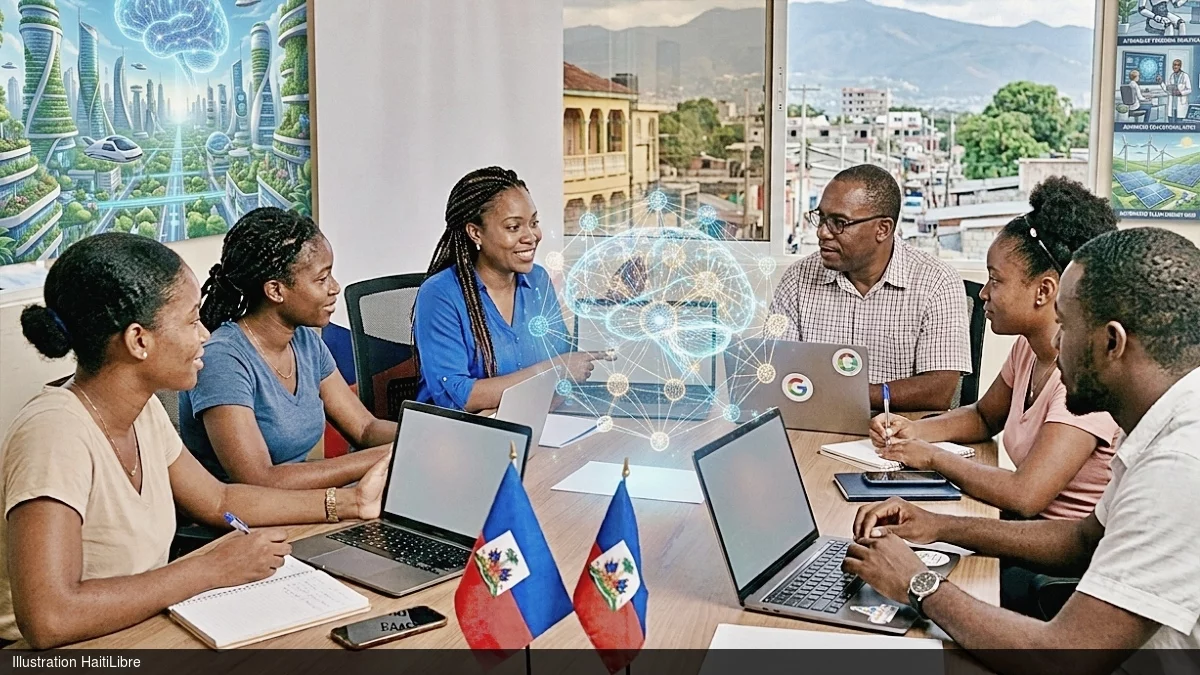
Artificial Intelligence, by virtue of its broad scope and the effects it will bring, constitutes the disruptive technology of the 21st century. According to observers, it will have an impact comparable to that of electricity and the Internet combined. For the first time in history, intelligence may be readily available to everyone, convenient and ready to be deployed. Aware of this challenge, four organizations—Banj, within the framework of the ProIA project funded by the Inter-American Development Bank (IDB); the Internet Society Haiti Chapter (ISOC Haiti); the Higher School of Infotronics of Haiti (ESIH); and the Association for Responsible AI (ARAI)—signed a collaboration agreement on Monday, August 10, for the joint development of a national roadmap for the responsible adoption of artificial intelligence in Haiti. The signed protocol defines the working method, roles, and decision-making rules applicable to the joint production of the roadmap. It does not create any financial obligation or contractual relationship between the Parties; it organizes their operational cooperation. Banj : Co-producing organization. Project leader for ProAI. (Marc Alain Boucicault) ISOC Haiti : Co-producing organization. Author of the reference guide for AI adoption in resource-limited countries (Max Larson Henry) ESIH : Co-producing organization (Patrick Attié) ARAI : Co-producing organization. (Sindy Obed) Each Party contributes its work, expertise, and network, and receives deliverables from the others. The four organizations share the conviction that the adoption of artificial intelligence in Haiti must be managed in a sovereign, responsible, realistic, and progressive manner, building on the country's existing capacities and international lessons learned adapted to resource-limited contexts. On this occasion, the partners also presented the preliminary version of two collaboratively produced structuring documents, which will serve as the foundation for developing the roadmap. Document 1 : Mapping the AI Ecosystem in Haiti : This document provides, for the first time, a structured map of the actors, capacities, and initiatives within Haiti's artificial intelligence ecosystem. Key Points of the Mapping : Eight pillars of actors organized into three functional layers: Foundations (public sector, infrastructure, and data), Drivers (education and research, entrepreneurship and the private sector, venture capital), and Amplifiers (diaspora, civil society and media, environment); More than 40 actors identified, with theoretical justification and specific role in the ecosystem; 8 priority sectors for AI adoption : health, agriculture, fintech, education, risk management, commerce, governance, and energy. Document 2 : The International Reference Guide for Developing a National Artificial Intelligence Strategy in Resource-Limited Countries : Developed jointly by ISOC Haiti, ESIH, and ARAI, with support from ProAI, this guide is intended for policymakers and donors. It addresses a central question: how can a resource-limited state govern and guide the use of AI in a realistic, useful, and responsible way, without waiting for capabilities it does not yet possess? The guide advocates an agile governance approach: governing by experimenting, learning quickly, and continuously adjusting. It is structured around five dimensions: a strategic framework based on two critical foundations (data governance and institutional capacity); a phased architecture with an implementation mechanism; prioritization of use cases; ethical governance that is both proportionate and structured around a national AI focal point; and a monitoring, evaluation, and learning system. This is neither a technical document, nor a catalog of solutions, nor a plan for large-scale investments: it is a public governance tool. It draws on the Haitian experience, practices observed in Rwanda, Benin, and Egypt, and aligns with Haiti’s National Digital Strategy (SNNH) 2025–2035 and UNESCO’s Roadmap for AI in the Caribbean. Working Group : Patrick Attié (Coordinator, ESIH), Ben-Manson Toussaint (Deputy Coordinator), Marc Arold Rosemond, Christelle Vaval, Schallum Pierre, and Luckny Zéphyr. Working documents open to contributions : Both documents are presented as living documents, open to comments and contributions from stakeholders in the ecosystem before their collective finalization. Public and private institutions, the education sector, civil society organizations, the media, members of the diaspora, and experts are invited to submit their observations and recommendations according to the procedures that will be communicated through ProAI's official channels. Learn more : About ProAI : Officially launched on March 11, 2026, the Program for Creating Digital Opportunities in Haiti through AI (ProAI) is organized by the Inter-American Development Bank (IDB) and powered by Banj. Designed as a national platform for research, training, and awareness, it spans three years and is structured around four pillars: AI training, the ProAI Network, national awareness campaigns, and the development of a national AI roadmap. ProAI aims to train at least 125 professionals in AI-related skills, establish a network connecting developers, institutions, policymakers, academics, and the diaspora, and conduct three national awareness campaigns. About ARAI : The Association for Responsible AI (ARAI) is an international non-profit organization working to promote, develop, and implement ethical, safe, and human-centered artificial intelligence. Founded in Dayton, Ohio (USA), ARAI brings together experts, researchers, public policymakers, professionals, businesses, and civil society organizations to promote responsible AI governance based on transparency, fairness, accountability, and respect for human rights. ARAI encourages the adoption of responsible artificial intelligence practices, supports research and innovation, develops governance frameworks, standards, certifications, and training programs, while raising awareness among organizations and the general public about the opportunities, risks, and societal impacts of AI. The association also contributes to international discussions on AI governance and supports public and private institutions in their responsible transformation. HL/ SL/ HaitiLibre
|
|









|
|
Why HaitiLibre ? |
Contact us |
Français
Copyright © 2010 - 2026 Haitilibre.com |