
|
|
||||||||||||||||||


| New revised electoral calendar (Oct. 28, 2026) |

|
 |
|
|
|
|
|
|
|||||
|
|
Haiti - Elections : Canada opposes the candidacies of individuals under sanctions 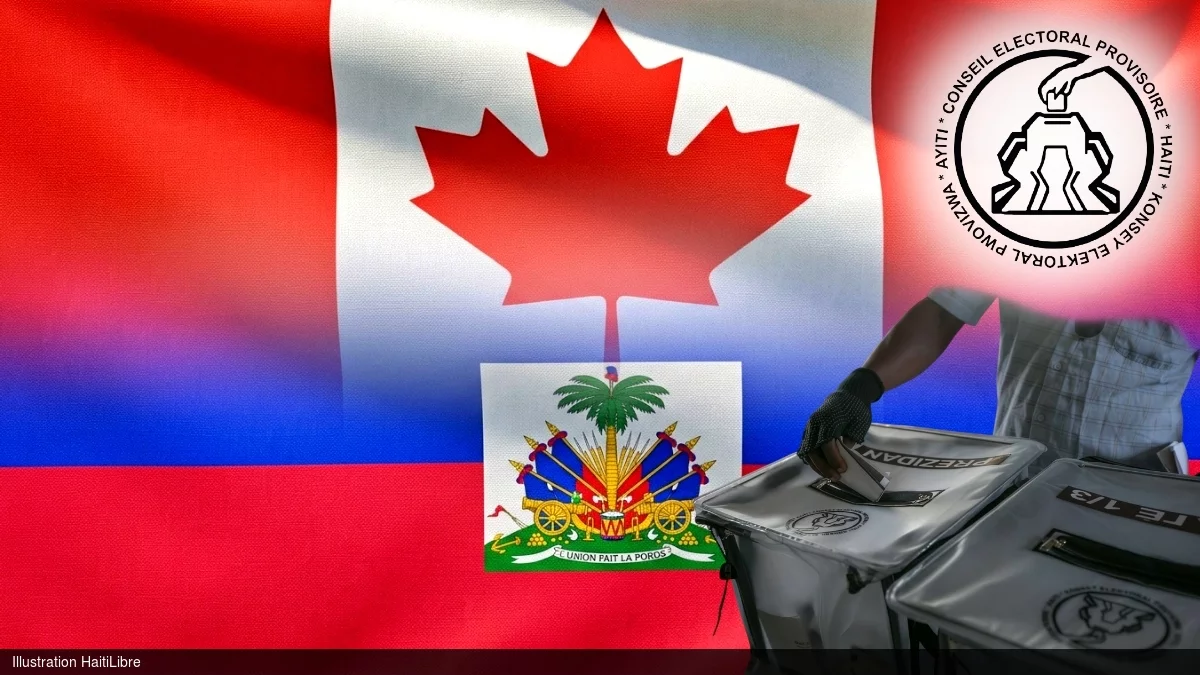
Canada is concerned that certain individuals currently subject to international sanctions for contributing to violence, corruption, human rights abuses, or the destabilization of Haiti are seeking to run as candidates in the upcoming elections. "It is essential to maintain the highest standards of integrity and transparency in order to ensure public confidence [...] Such candidacies risk undermining public confidence in the electoral process as well as the objective of restoring legitimate, accountable, and democratic governance in Haiti." Canada reaffirms the legitimacy and continued enforcement of international sanctions imposed on individuals for conduct including complicity with criminal networks and armed gangs, corruption, illicit trafficking, money laundering, human rights abuses, and actions that undermine Haiti’s peace, security, and institutional stability. It also underscores the importance of ensuring its continued implementation. He points out that elected office carries exceptional responsibilities, including stewardship of public resources and engagement with domestic and international financial and regulatory systems. These responsibilities require not only the confidence of the Haitian people, but also the ability to perform official duties without impediment. Canada calls on the Haitian authorities, including Haiti’s Provisional Electoral Council (CEP), to ensure that the electoral process is conducted in accordance with applicable laws and regulations. It also encourages all political actors to demonstrate a commitment to democratic principles, responsible leadership, and the national interest of the country. Differences between legitimacy and legality International sanctions (such as asset freezes, travel bans, etc.) are not judicial convictions handed down by a criminal court; rather, they are administrative decisions made by sovereign states. Something may be legitimate without being legal, and the reverse is also true. Legitimacy is rooted in a higher principle of justice, fairness, morality, or social consensus—that is, what the population perceives as "just". Legitimacy is a more subjective concept than legality, as it depends on how citizens perceive and accept both the rules and the authority in place. It is essential for the stability of a political system, as it extends beyond mere compliance with the law. Legality refers to conformity with positive law—that is, the written laws and rules in force within a state at any given time. HL/ HaitiLibre
|
|









|
|
Why HaitiLibre ? |
Contact us |
Français
Copyright © 2010 - 2026 Haitilibre.com |