
|
|
||||||||||||||||||


| New revised electoral calendar (Oct. 28, 2026) |

|
 |
|
|
|
|
|
|
|||||
|
|
Haiti - El Salvador : Minister Pélissier visits the Terrorism Confinement Center (CECOT) 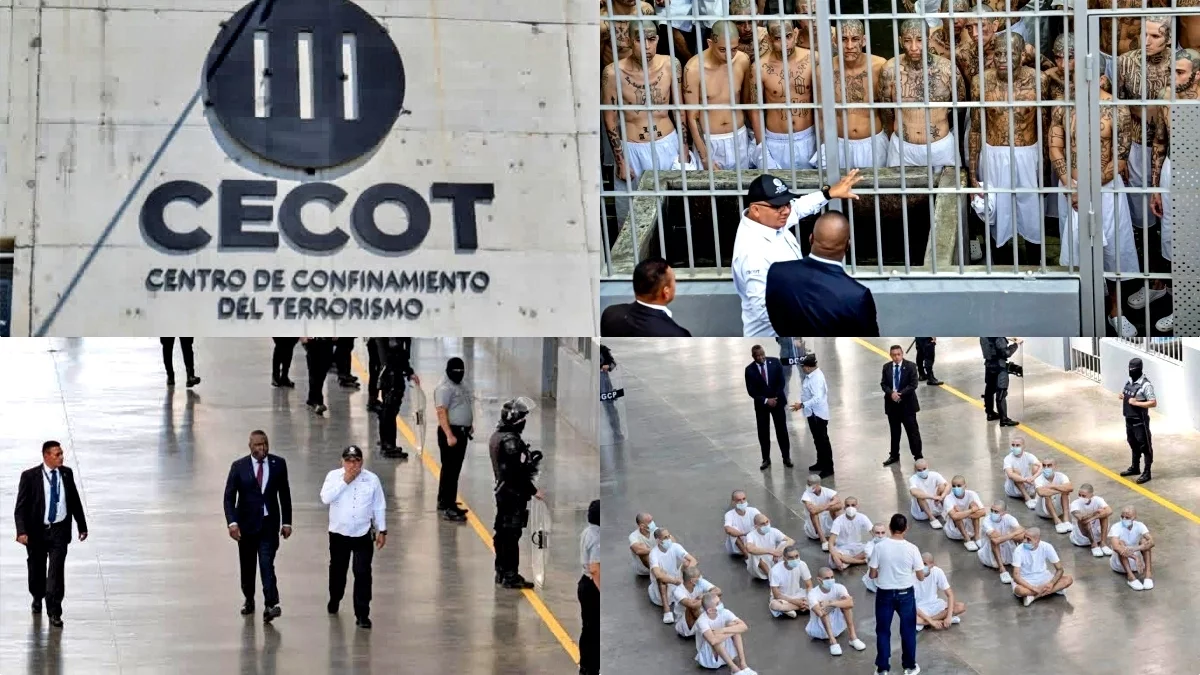
Patrick Pélissier, Minister of Justice and Public Security, participated in the 2nd International Conference on the State and Democracy, held on November 16-17 in El Salvador. The event brought together representatives from over 50 Nations to address key issues concerning governance, security, and development. Through this mission, Haiti sought to examine international experiences that could contribute to strengthening state capacity, restoring public authority, and achieving a sustainable re-establishment of national security. On the sidelines of the conference, Minister Pélissier visited the Terrorism Confinement Center (CECOT) in El Salvador, accompanied by his Salvadoran counterpart, Gustavo Villatoro. The visit was part of an effort to exchange expertise and foster cooperation regarding strategies to combat gangs and organized crime. During his participation in the conference, Pélissier expressed his gratitude to Salvadoran President Nayib Bukele for the support provided to Haiti through various operations aimed at countering the armed gangs that are terrorizing the population. He also noted an improvement in the security climate, specifically highlighting the involvement of Salvadoran personnel in efforts to restore security within the country. More about the CECOT detention center : The Terrorism Confinement Center (CECOT) is a high-security prison located in Tecoluca, El Salvador, which was inaugurated in early 2023 under the presidency of Nayib Bukele. Designed to house up to 40,000 inmates, the facility spans a vast, isolated area, with approximately 23 hectares of built-up space, surrounded by high walls, electrified fencing, and watchtowers. The CECOT was built in a record time of approximately 7 months at an estimated cost of $135 million. The facility is guarded around the clock by hundreds of military and police personnel, with strict access control and no telephone network coverage in the surrounding area. The center houses alleged gang members (such as those from MS-13 or Barrio 18), as well as individuals deported from other countries under various agreements or security policies. Inmates are held in large groups per cell, with no rehabilitation programs or family visits. According to reports from human rights organizations and international media, conditions at the facility have drawn sharp criticism regarding the lack of due process, the use of isolation, and the treatment of detainees. Supporters of the Salvadoran government point to a marked decline in crime across the country, while other observers warn of the potential risks and abuses inherent in this model of incarceration. SL/ HaitiLibre
|
|









|
|
Why HaitiLibre ? |
Contact us |
Français
Copyright © 2010 - 2026 Haitilibre.com |