
|
|
||||||||||||||||||


| New revised electoral calendar (Oct. 28, 2026) |

|
 |
|
|
|
|
|
|
|||||
|
|
Haiti - South : An ILO project creates more than 8,600 workdays 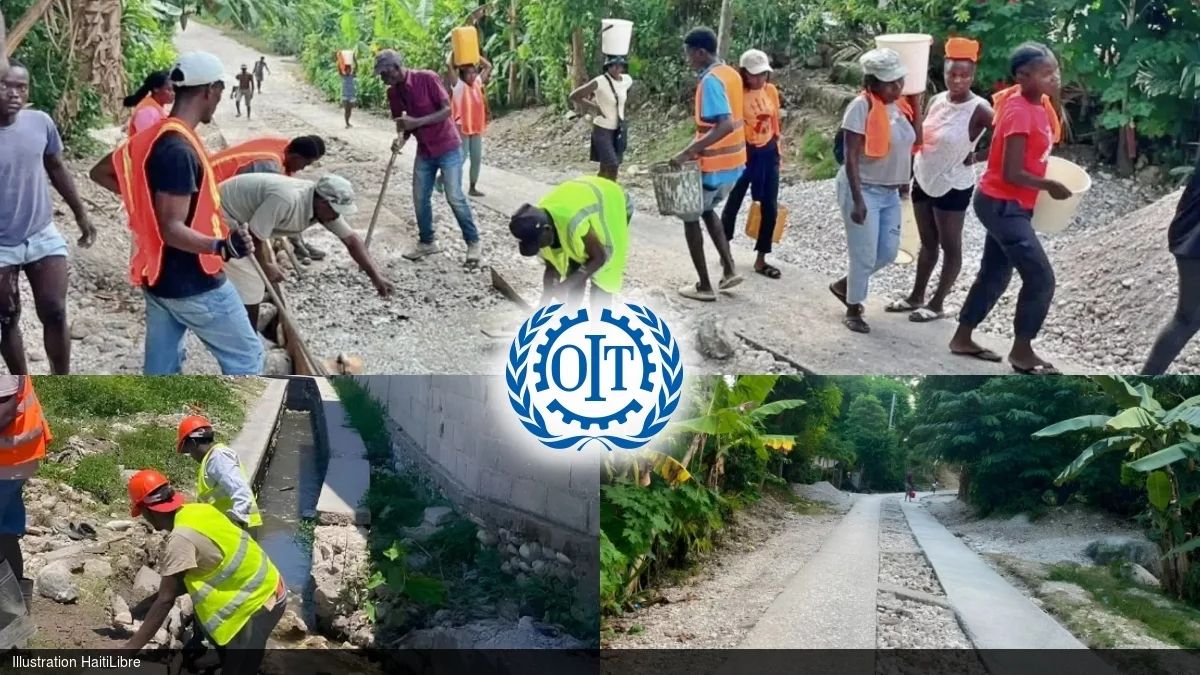
In southern Haiti, a project by the International Labour Organization (ILO) generated more than 8,600 workdays through the rehabilitation of irrigation canals and other rural infrastructure, while also providing training to young people. With a budget of $505,000 USD, this infrastructure rehabilitation and skills development initiative-based on a labour-intensive approach was funded through the ILO’s Regular Budget Supplementary Account. Young people were among the primary beneficiaries of the project: more than half of the workdays generated went to young women, and 25% to young men. These paid positions provided income to the participants while enabling them to contribute to improving the infrastructure in their local communities. Beyond these temporary jobs, the project allowed young people to acquire practical skills in construction trades, including masonry, carpentry, metalwork, formwork, surveying, and drilling. It also strengthened the capacity of local offices of the Ministry of Agriculture to carry out rural infrastructure projects. In the communes of Les Cayes, Torbeck, and Camp-Perrin, residents faced several challenges : a lack of water for irrigation during the dry season, inadequate water drainage during heavy rains, and the deterioration of rural roads. These issues hindered agricultural activities, the transport of produce, and access to essential services. Labor-intensive works have made it possible to clear nearly 10 kilometers of irrigation and drainage canals, excavate over 1.6 kilometers of new channels, construct 121 meters of masonry-lined canals, and repair another 50 meters. In Gracette and Ti Bannan, in particular, these interventions have improved water flow, facilitating crop irrigation and enhancing rainwater drainage to mitigate flood risks. In Ti Guinin and Milor, the rehabilitation of rural roads, the construction of water crossings, and erosion-control measures have improved transport conditions and the movement of agricultural produce. In Milor, 700 trees were also planted to help protect the local environment. These improvements address interconnected needs—access to water, mobility, and agricultural activity while providing temporary income to the individuals hired for the work. Beyond the jobs created and the infrastructure built, the project fostered skill acquisition, workplace safety, and community participation. More than 100 people took part in training sessions or awareness-raising workshops covering occupational health and safety, gender equality, decent work, peacebuilding, and local initiatives. These activities contributed to a better understanding of labor rights and preventive measures, while also fostering greater cooperation at the work sites. For some participants, the income earned also helped cover immediate family expenses, such as those related to the start of the school year. The project illustrates the value of a labor-intensive approach: infrastructure works provide immediate income while improving facilities essential to the economic life of rural areas. When combined with practical training and the participation of local residents, such projects can also strengthen local capacities. HL/ HaitiLibre
|
|









|
|
Why HaitiLibre ? |
Contact us |
Français
Copyright © 2010 - 2026 Haitilibre.com |