
|
|
||||||||||||||||||


| 2026-2027 Electoral Calendar, latest official version |

|
 |
|
|
|
|
|
|
|||||||
|
|
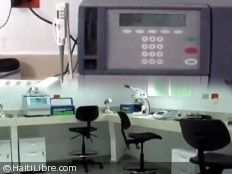
Haiti - Health : Two new modern microbiology laboratories
This week, Florence Duperval Guillaume, the Minister of Health inaugurated a microbiology laboratory at the cutting edge of technology, in the department of North, in Cap-Haitien, in the presence of Brazilian Ambassador Luiz Inacio Machado e Costa, of Felipe Munevar, the representative of the United Nations Office for Project Support Services (UNOPS) and the Cuban Ambassador Ricardo García Nápoles, among other personalities. This laboratory is part of the tripartite cooperation Brazil-Cuba-Haiti, or the "Haiti Project", which aims, among other things, to strengthen the epidemiological surveillance system in Haiti. This regional laboratory is located in the premises of the University Hospital Justinien of Cap Haitien and was funded by the Brazilian Cooperation Agency (ABC) in cooperation with the Ministry of Health of Cuba. The Brazilian government has provided U.S. $336.296 for the reconstruction of the laboratory and the purchase of equipment. Alberto Kleiman, Special Advisor for International Affairs at the Ministry of Health, emphasized the fundamental role of the unit in monitoring and improving epidemiological surveillance in Haiti. "The laboratory is located in an underprivileged area, presenting compromised health conditions, and is far from the capital city where all the health services are concentrated. Accordingly, a well-structured, local epidemiological surveillance operation is very important." In its speech, the Minister Guillaume explained that this laboratory "[...] will allow the Haitian government to control certain diseases and do research on their evolution [...] this laboratory is equipped with the most modern equipment. Today, Haiti joined 194 countries, in the implementation of the International Health Regulations, which makes obligation to report events with potential epidemic to the World Health Organization (WHO), [...] that is why, in the objective to protect and inform the public of any health risk, the Ministry stands ready to participate, to the global detection system of diseases, by providing the necessary means to identify and characterize the emergence of any new diseases that could constitute an epidemic risk for our country and for our region. Everyone [...] also knows that no diagnosis can be established without a good para clinic, that begins with laboratory tests. That is why I invite you all to make good use of this new regional laboratory because it will help us to have the conscience quieter and save more lives. Until the cholera disappears from the entire island, [...] the Ministry of Health intends to use the system of enhanced surveillance, by laboratories providing quality services to confirm outbreaks in order to extinguish as soon as possible the residual foci of this disease [...]" On the other hand, Brazil has funded a second laboratory in the area of Les Cayes and invested a total of $624.549 in both laboratory. These two laboratories will perform surveillance activities in water quality and biological environmental factors (vectors, hosts, reservoirs and venomous animals), in addition to monitoring human populations exposed to biological, chemical and physical environmental factors. They will operate in an integrated manner with the National Laboratory of Public Health in Haiti, located in the capital Port-au-Prince, and built in 2006 by the Haitian Ministry of Health. The laboratory has been a reference in the diagnosis and monitoring of diseases such as malaria, AIDS and tuberculosis. HL/ HaitiLibre
|
|








|
|
Why HaitiLibre ? |
Contact us |
Français
Copyright © 2010 - 2026 Haitilibre.com |