
|
|
||||||||||||||||||


| 2026-2027 Electoral Calendar, latest official version |

|
 |
|
|
|
|
|
|
|||||||
|
|
Haiti - Disaster : Caribbean tsunami test, highlights some deficiencies
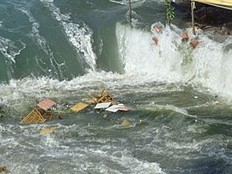
The first full scale test of the tsunami warning system in the Caribbean, made March 23, has highlighted the need to reinforce preparations, improving communication, evacuation plans and the role of the private sector. Baptised Caribe Wave 2011, the exercise tested the Tsunami and Other Coastal Hazards Warning System for the Caribbean and Adjacent Regions (Caribe EWS). The system was established in 2005 under the aegis of UNESCO’s Intergovernmental Oceanographic Commission (IOC). On 23 March, 34 countries took part in the first ever simulation of a tsunami alert in the Caribbean region. Under the test scenario (SIMULATION) prepared by the organizers, a 7.6 magnitude earthquake (FICTITIOUS) was signaled off the coast of the Virgin Islands, which generated a tsunami with waves reaching of up to ten metres. At 1.02pm (UTC) a 'dummy' message was issued from the Pacific Tsunami Warning Centre and the West Coast and Alaska Tsunami Warning Centre, operated by the National Oceanic and Atmospheric Administration (NOAA, U.S.A). The message by was relayed to national authorities in participating countries, who then alerted the public using a variety of systems including sirens, text messages, email, media outlets, and telephone. "I am delighted with the level of participation in this exercise and the interest that has been shown by local populations," said UNESCO Director-General Irina Bokova. "Such drills are essential to evaluate the efficiency of warning systems and ensure their efficient operation when catastrophe strikes." The exercise highlighted a number of gaps in the transmission of information. In several areas the message was not received by the Global Telecommunications System (GTS). In other cases, reception of messages via the Emergency Managers Weather Information Network (EMWIN) failed. At national level only a few mobile telephone operators joined the exercise. Populations and media throughout the region keenly followed the exercise, which also allowed for an evaluation of evacuation plans and the role of the private sector in the case of a catastrophe. The complete results of the test run will be presented at the next meeting of the Intergovernmental Coordination Group for CARIBE EWS, which will take place on April 26-29, 2011, in the Dominican Republic. A decision will then be taken on if and when the next exercise will be held. See also : BF/ HaitiLibre
|
|









|
|
Why HaitiLibre ? |
Contact us |
Français
Copyright © 2010 - 2026 Haitilibre.com |