
|
|
||||||||||||||||||


| 2026-2027 Electoral Calendar, latest official version |

|
 |
|
|
|
|
|
|
|||||
|
|
Haiti - Elections : 3rd revision of the electoral decree, details of the amendments (PDF) 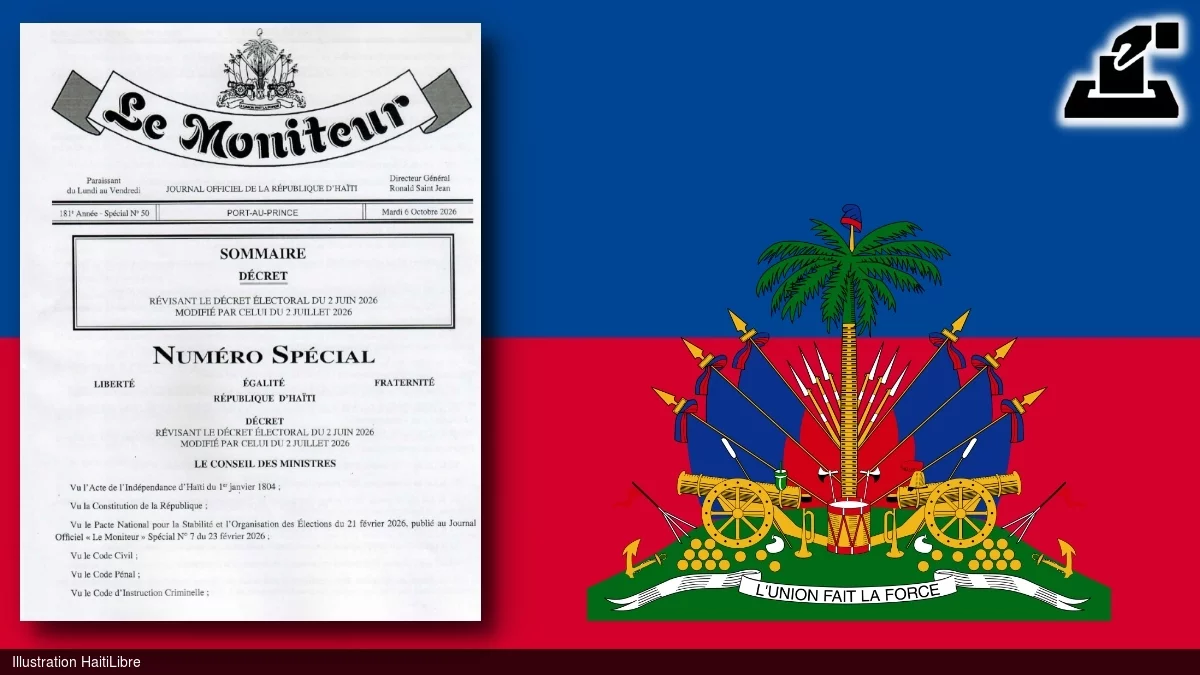
In the electoral decree of October 6, 2026, the Prime Minister's Office introduced new changes to the previous revised versions dated June 2 and July 2, 2026. Several administrative, financial, and legal "safeguards" originally intended to vet candidates have been eliminated: 1- Article 153 (Paragraphs 20 and 21) : Eliminated What was eliminated : Paragraph 20 : Required a certificate from the Bank of the Republic of Haiti (BRH) proving that the candidate was not subject to a ban on issuing checks, nor insolvent or bankrupt. This paragraph also declared ineligible any individuals sanctioned by the UN Security Council, the US Department of the Treasury (OFAC), or other foreign governments. Paragraph 21 : Required a certificate from the National Old-Age Insurance Office (ONA) and the Industrial Development Fund (FDI) attesting that the candidate had no outstanding loans with these institutions. Consequences : Eligibility criteria regarding financial standing and international conduct have been significantly relaxed. Political actors subject to international sanctions or involved in financial disputes with the State may register freely. The UN and various analysts have warned that the country is weakening its defenses against the infiltration of criminal capital and sanctioned figures into the political sphere at the very moment it needs them most. Other amendments and article deletions : (Articles 153, 14, 22.2) Article 153 (Paragraphs 14 and 26) : The requirement for a negative police record certificate has been replaced by an asset declaration, while the mental health certificate requirement has been simplified to a standard medical certificate. A notarized affidavit remains mandatory. Article 14 (Paragraph 8, point 3) and Article 22.2 : The provision defining the duties of the CEP’s steering body has been repealed (deferred to internal regulations), and the 2% quota for persons with disabilities within the Electoral Office has been eliminated. 2 - Changes to structures, timeframes, and challenge procedures : Timeframes and roles (Articles 12, 14.6.6, and 133) : The CEP’s reporting deadline has been extended from 15 to 30 days, and the validation of parties with 30,000 members is now entrusted directly to the CEP rather than the Ministry of Justice. Challenges and Mayors (Articles 170 and 388): Any voter may challenge a candidacy outside their place of residence. For incumbent mayors, the deadline for resignation has been relaxed to 7 days following the publication of the decree, provided their candidacy is validated. 3 - Reduction of registration fees to foster inclusivit y: Presidency: 2,000,000 HTG (unchanged) Senate: 400,000 HTG (previous decree: 800,000 HTG) Chamber of Deputies: 100,000 HTG (previous decree: 300,000 HTG) Municipal Council candidate Cartel : 50,000 HTG (previous decree: 100,000 HTG) CASEC candidate Cartel : 15,000 HTG (previous decree: 25,000 HTG) CASEC candidate Cartel : 5,000 HTG (previous decree: 25,000 HTG) 4 - Overall postponement of the schedule : The accumulation of changes made the initial deadlines untenable: Registration is postponed to October 31, 2026. The elections and referendum scheduled for December 13, 2026, pending the publication of a new schedule, remain unconfirmed for the time being. 5 - Indirect changes regarding the application of Article 76 : Article 76 of the electoral decree (which specifies the documents required regarding candidates' tax status) was not eliminated by the October 2026 reform, but it was subject to strict reframing to harmonize with the general easing of eligibility criteria. Although Article 76 maintains the requirement to be in good standing with the Haitian tax authorities, the deletions made in other articles (notably Article 153) significantly alter the scope of the financial vetting process : Decoupling from the banking system and public debts : Previously, the tax clearance certificate required by Article 76 operated in tandem with certificates of non-indebtedness (from the BRH, ONA, and FDI). Now, a candidate can obtain a tax clearance certificate from the DGI (proof of current tax compliance) while still holding outstanding debts to State-owned banks or industrial development funds, as the latter criteria have been removed. Retention of the screening mechanism for public authorizing officers : The requirement to provide a general tax clearance certificate (Article 76) does not exempt former ministers, directors general, or managers of public funds from the obligation to obtain a formal discharge (a clearance ruling from the Superior Court of Auditors and Administrative Disputes-CSC/CA), which remains a separate and mandatory document. Article 76 remains one of the electoral decree’s final financial safeguards: no one may run for office unless they are up to date with the DGI (Tax Authority). However, its effectiveness in screening out illicit funds or insolvent candidates is diminished, as it focuses solely on legally declared taxes, without any verification of credit history or records of bankruptcy. Electoral Decree of October 6, 2026 (PDF in French - 79 pages) : https://www.haitilibre.com/docs/decret-electoral-06-10-2026.pdf Read also : SL/ HaitiLibre
|
|









|
|
Why HaitiLibre ? |
Contact us |
Français
Copyright © 2010 - 2026 Haitilibre.com |