
|
|
||||||||||||||||||


| 2026-2027 Electoral Calendar, latest official version |

|
 |
|
|
|
|
|
|
|||||||
|
|
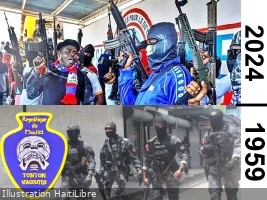
Haiti - History : Evolution of «gangs» since their creation in 1959
According to what the Head of the United Nations Integrated Office in Haiti (BINUH) reported to the UN Security Council, approximately 300 gangs exist in Haiti and 80% of Port-au-Prince is under direct control or under influence of powerful gangs. The historical model of today's gangs finds its origins in 1959 in the National Security Volunteers (VSN) militias, better known as "Tonton Makout" created by the dictator François Duvalier, a militia which committed crimes with complete impunity. According to estimates in 28 years of power, the "Tonton Macoutes" would have killed around 60,000 people. At the fall of the Duvalier dynasty with the exile of his son Jean-Claude Duvalier in 1986, the "Tontons Macoutes" were dissolved. In 1990 Jean-Bertrand Aristide, the first elected president, was the victim of a military coup. After Aristide's dismissal, the former Macoutes created gangs called "attaches", serving other criminal groups or politicians. In 1994, once restored to his functions by an American intervention under UN control, J-B Aristide decided to dissolve the army and reform the police. Several former soldiers then joined the criminal groups that had formed in the meantime. Aristide himself was accused of having created his own militia the "Chimeres" in the early 2000s to support his political camp. From this time on, the various political actors continued to create their own armed militias or use existing ones. In 2004 Aristide was ousted from power by the Armed Revolutionary Front for the Progress of Haiti (FRAPH), paramilitary bands made up of local gangs and former soldiers and police officers exiled in the Dominican Republic. Despite the deployment of a UN force in Haiti, the security situation has only deteriorated. The earthquake of January 2010 made the living conditions of the population even more precarious, facilitating the recruitment of gangs which multiplied. The assassination of President Jovenel Moïse on July 7, 2021 https://www.haitilibre.com/en/news-34162-haiti-flash-president-jovenel-moise-assassinated-by-mercenaries-official-updated-7am-+-video.html has once again increased insecurity and strengthened the power of the gangs. Since then, the gangs have been fighting among themselves for control of territories, roads and the main ports through which legal and illegal goods (weapons, ammunition, narcotics) transit, giving rise to a veritable "kidnapping industry" like the one of the sources of financing for organized crime. TB/ HaitiLibre
|
|









|
|
Why HaitiLibre ? |
Contact us |
Français
Copyright © 2010 - 2026 Haitilibre.com |